
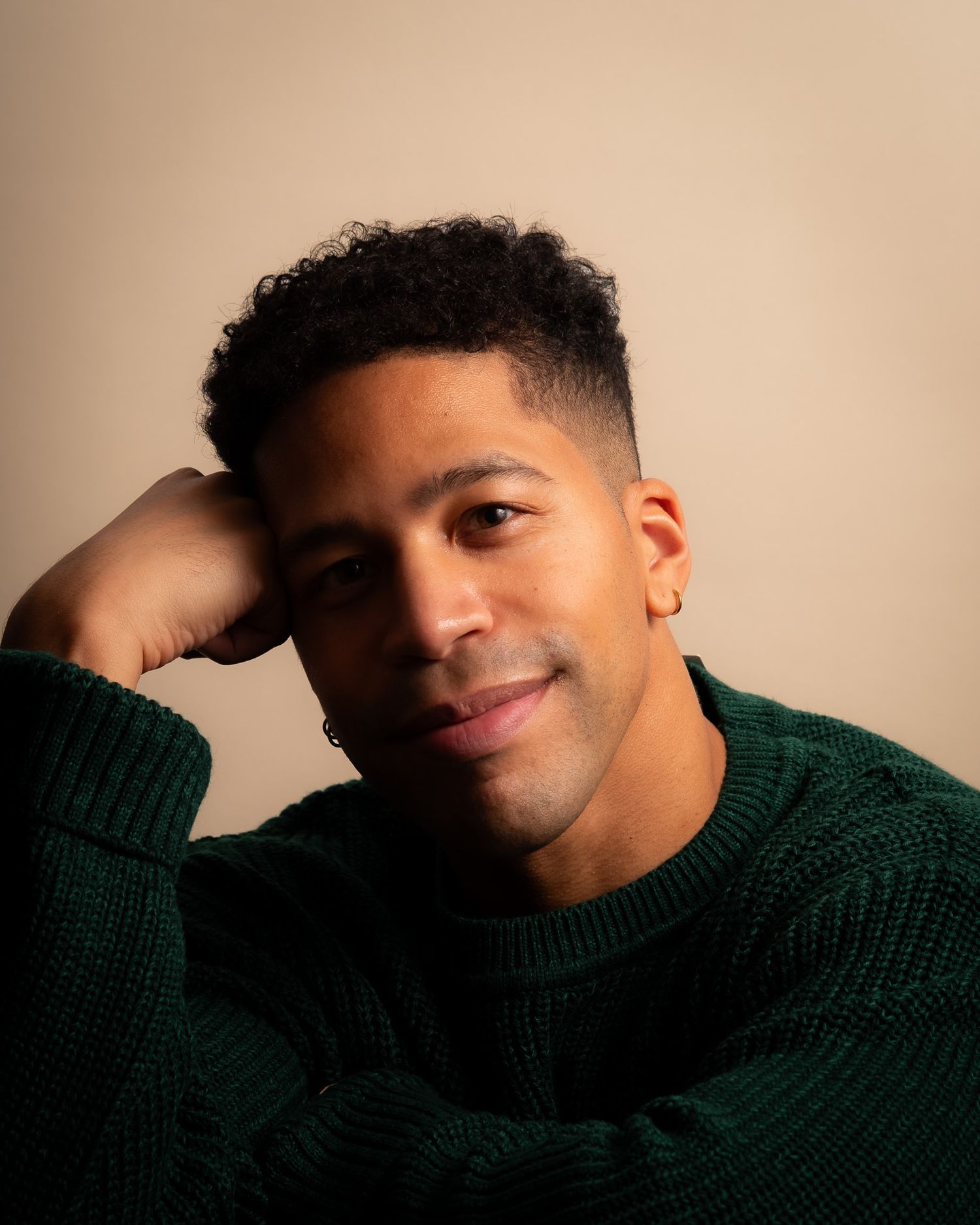
Photography is an act of seeing. But it is also, always, an act of deciding what is worth seeing. And for most of wedding photography's history, that decision has been made by people who look nothing like me.
My name is Nathan Alston. I am a Black queer wedding and portrait photographer, and I believe that who holds the camera matters as much as what is in front of it. That belief is not abstract to me. It is the reason I picked up a camera. It is the reason I built a business. And it is the reason that today, I want to talk about something you do not hear that often in the photography industry: we need more Black queer photographers behind the lens.
The Wedding Photography Industry Has a Representation Problem
If you scroll through the portfolios of the most-featured, most-booked, most-published wedding photographers in America, a pattern emerges quickly. The photographers are overwhelmingly white. The couples they feature are overwhelmingly straight, overwhelmingly thin, and overwhelmingly white. The aesthetics are beautiful, in a very particular and narrow kind of way.
This is not a small thing. When couples go looking for a photographer, they are looking for someone who can imagine their wedding, who can see them. For Black couples, for queer couples, or even for straight couples looking for a fresh take, finding that person can feel like searching for a needle in a haystack.
The question "Who sees us?" is not a rhetorical one. It is urgent and practical. Because the answer shapes everything from the mood of a shoot to the poses a photographer suggests, to whether or not a couple feels comfortable enough to fully relax and let their love fill the frame.
Why Lived Experience Changes Everything
There is a difference between a photographer who is LGBTQ+ "friendly" and a photographer who is LGBTQ+. There is a difference between a photographer who has done a diversity training and a photographer who has navigated a world that was not built for them.
When I photograph a queer wedding, I am not approaching it as an outsider trying to be respectful. I am approaching it as someone who knows what it means to move through the world as a queer Black person, who understands the particular tenderness and the particular defiance that can coexist in a single moment of celebration. I know what it means to build a chosen family. I know what it means to claim joy as an act of resistance. And I bring all of that knowing to the way I see through my lens.
That lived experience also means I understand things about Black weddings that many photographers simply miss. The particular way that Black joy shows up in a room. The importance of certain traditions. The way that family structures can be complex and layered and beautiful in ways that are specific to our community. I see these things not because I studied them, but because I have lived them.
The Archive We Are Building
Wedding photographs are not just keepsakes. They are historical documents. They are the archive of love.
For centuries, the archive of queer love was mostly hidden, private snapshots tucked into drawers, coded intimacy in formal portraits, history that was lived but not recorded. For centuries, the archive of Black love was filtered through a white gaze that rarely captured its full depth and beauty.
Every photograph I take is my contribution to a different kind of archive. An archive where Black and queer love is visible, celebrated, and documented with the reverence it deserves. An archive that future generations of Black queer people can look back on and see themselves.
I think about the children who will grow up and one day see photographs of people who look like them, loving each other, on the most important day of their lives. I think about what that seeing does to a child. My work at Plucky Comics, a company I co-founded to bring the untold stories of Black queer historical figures to life through comics for children, taught me how profoundly representation shapes a young person's sense of what is possible for them. The same principle applies to wedding photography. When Black queer children see Black queer couples photographed beautifully, they learn that they are deserving of beautiful things.
Black queer stories that history has marginalized.
Wedding photography became another form of that same work. Every couple I photograph is a story. And every story of Black queer love that is told with beauty and care is an act of resistance against a world that has spent a very long time telling us that our love is less than. It is not less than. It is extraordinary.
What This Means for You
If you are looking for photography that is trying to rethink what wedding photography can look like, let's collaborate to document your story in a way that is fresh and new. Let's take a modern approach to an old tradition that better speaks to who we are in the here and now.
Nathan Alston is a Black queer wedding and portrait photographer based in the United States. He is also the co-founder of Plucky Comics, an educational comic book company dedicated to telling the stories of Black queer historical figures. Learn more at nathanalstonphoto.com and pluckycomics.com.